Journey to Aberdeen by Rail: Scenic Wonders and Smart Ticketing from Dundee
Destinations . Sustainable Travel . Travel Tips1. A Departure Laced with Anticipation
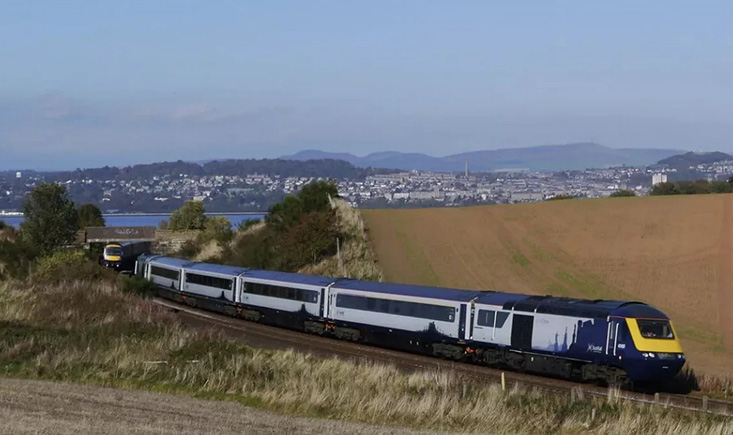
The platform at Dundee railway station carries an understated charm—neither too bustling nor too sleepy. Early in the morning, the fresh North Sea air snakes through the gaps in the stone buildings, curling along the iron tracks like an old friend. I arrived just as the sun began to filter through the soft Scottish clouds, illuminating the Tay Rail Bridge in hues of gold and amber. There is a quiet poetry in starting a journey here, where the River Tay meets the city’s architectural dignity and maritime soul.
As the train approached, its silhouette shimmered slightly in the morning light. There’s something old-world about the sight of a train arriving. The sound of wheels on rails, the hiss of brakes, and the gentle clinking of metal all seem to belong to another era, yet they welcome today’s traveler just the same.
2. First Glimpses Through the Window
The train slid northward along the coastline with a grace that betrayed its speed. Once past the edge of Dundee, the urban veneer begins to give way. Within minutes, city blocks turn into wide stretches of green, dotted with the occasional sheep, and stone farmhouses resting against soft hills like seasoned anchors.
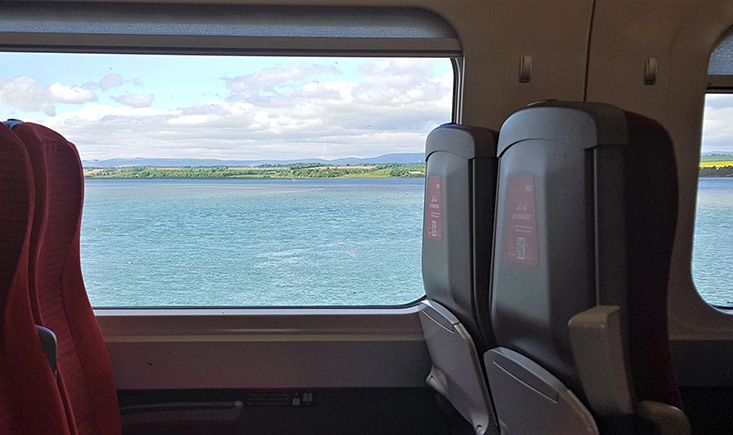
The windows, large and slightly tinted, framed Scotland like a moving landscape painting. The North Sea makes fleeting appearances—its grey-blue surface sometimes a mirror, sometimes a restless field, always present like a breath just out of reach. The sea and sky often seemed to blend into one another, held apart only by the faintest line of horizon.
3. From Angus to Aberdeenshire: Changing Tones of the Land
As the train advanced into Angus and eventually Aberdeenshire, the scenery shifted in character. The hills became more pronounced, shadows deepening in their folds. Fields of barley and rapeseed stretched into the distance, their colors intense in the sunlight. Every so often, ancient stone walls would trace the earth like wrinkles on the land’s well-worn face.
Wind turbines stood sentinel on ridges, their white blades slicing through the sky in solemn rhythm. These modern additions do not disrupt the landscape so much as participate in it, their clean lines echoing the disciplined geometry of farming plots and fencing.
Through the window, villages appeared and vanished. Names like Arbroath, Montrose, and Stonehaven flickered briefly on the station signs, each evoking a history worth its own chapter. Stonehaven, especially, offered a momentary marvel. From the tracks, you can catch a glimpse of the harbor, its old stone pier curling like a protective arm into the sea. On clear days, the cliffs near Dunnottar Castle make a ghostly silhouette in the distance, a watchtower from another time.
4. Inside the Carriage: Calm, Comfortable, and Connected
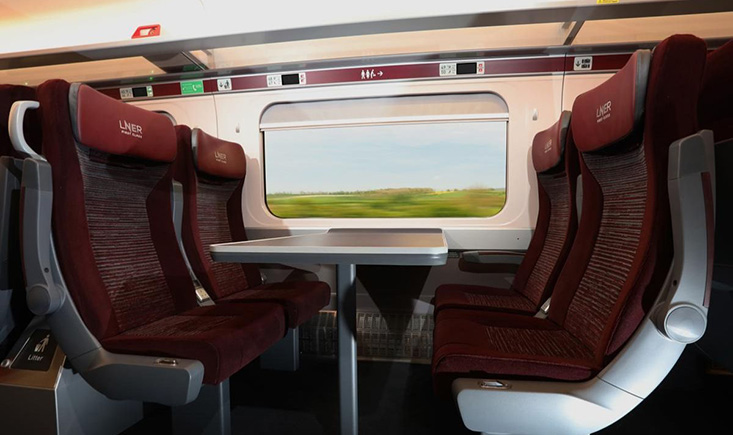
The interior of the ScotRail service was designed more for comfort than opulence. Upholstered seats in navy and grey, with tartan motifs subtly woven in, reflected both function and national pride. The hum of the engine was steady, and passengers, ranging from daily commuters to fellow leisure travelers, settled into an unspoken camaraderie. A few read newspapers, some scrolled through their phones, and others simply watched the scenery with the contented gaze of someone choosing not to look at a screen.
Wi-Fi was available, modest but reliable. Power outlets were conveniently placed for those inclined to work or charge devices. The quiet coach, clearly marked, offered sanctuary to those seeking silence, and even in standard seating, legroom was generous enough for long-legged travelers to stretch without guilt.
Occasionally, an attendant passed through with a trolley service—tea, coffee, and the ever-tempting shortbread biscuits. There’s something deeply satisfying about sipping hot tea as miles of moorland slide past your window.
5. Ticketing Tactics: How to Book Smarter, Travel Better
Planning for the Dundee-to-Aberdeen journey requires more than just picking a day and time. The secret lies in the timing and choice of platforms for booking. I used two platforms that stood out for both user experience and practical savings: ScotRail and Trainline.
ScotRail’s Official Website:
ScotRail offers direct bookings with real-time availability, loyalty discounts for frequent travelers, and access to off-peak deals. Their “Club 50” discount for travelers over 50 and Railcards (like the Two Together or Senior Railcard) can make a notable dent in prices.
Trainline:
While Trainline charges a small booking fee, it shines in offering a comparative view of different departure times and ticket classes. Their app provides real-time tracking, delay alerts, and e-tickets, which can be added directly to Apple Wallet or Android equivalents.
For this trip, I booked an Off-Peak Return Ticket, which allowed for flexibility in my return journey—a small but appreciated mercy when traveling in a country where weather and whimsy are in equal supply. I also opted for a Standard Advance Ticket on the outbound leg, selected a specific train, and saved nearly 40% compared to a walk-up fare.
Booking at least two weeks in advance often yields the best rates. It’s also worth checking for split-ticketing options—Trainline and Split My Fare sometimes offer combinations of two or more tickets for the same journey that come out cheaper than a single fare.
6. Stops That Deserve More Than a Passing Glance
While my destination was Aberdeen, the stations along the way offered their own subtle invitations. Here are a few worth noting:
Arbroath
The home of the famous Arbroath Smokie, this coastal town exudes character. From the train, you can sometimes catch a whiff of the smoked haddock that has become its culinary signature. The red sandstone cliffs and the lighthouse stand as reminders of its seafaring past.
Montrose
A vast tidal basin greets travelers just before reaching the station. The wetlands here are a haven for birdlife. In the early hours, it isn’t unusual to spot herons or flocks of geese in graceful formation. The bridge crossing the basin provides a moment of suspended motion, as water and reflection create a fleeting sense of levitation.
Laurencekirk
This quiet station sits near the foot of the Grampian Mountains. Although often bypassed, its surrounding countryside—lush, green, and steeped in tranquility—offers walking paths ideal for a half-day detour.
Stonehaven
A town that deserves a longer stay. The view from the train includes rooftops nestled near the sea and glimpses of dramatic coastal cliffs. With time to spare, one could alight here and hike to Dunnottar Castle, whose ruins rest atop a headland like a crown forgotten by time.
7. Approach to Aberdeen: Granite City in the Distance
The approach to Aberdeen is a gentle crescendo. Suburbs begin to appear, with slate roofs and neat gardens. The train curves slightly inland, leaving behind the open coast, and the land becomes more structured—more urban, yet still tinged with green.
Soon, the telltale shimmer of granite appears in buildings along the track. Aberdeen’s moniker, “The Granite City,” proves apt. In full sunlight, its buildings glow silvery-white; under overcast skies, they take on a dignified grey, somber but not sorrowful.
Arriving at Aberdeen Station brings with it a sense of arrival both in space and mood. Located right in the heart of the city, the station offers immediate access to Union Street, the harbor, and the city’s various cultural venues. The transition from the softness of the landscape to the structured elegance of granite architecture is striking, like stepping from a poem into prose.
8. Post-Journey Reflections from the Platform
As the train slowed to a halt in Aberdeen, I lingered a moment before stepping off. There’s a rhythm to train travel in Scotland—unhurried, immersive, and oddly reassuring. It allows one to absorb the country not through hurried snapshots, but through continuous observation, as though reading a novel instead of watching a film.
From the banks of the Tay to the towers of Aberdeen, the journey unfolded like a story in several chapters, each one shaped by the land, the sea, and the subtle marks of human life. The train was not merely a means of transportation; it was a vantage point, a classroom, a companion.
9. The Landscape Between the Lines
What remains long after arriving is not just the images captured on camera, but the scenes remembered without effort—the lone bird sailing above the basin at Montrose, the sudden burst of yellow in a rapeseed field, the rugged silhouette of a cliff beyond Stonehaven. They are the kinds of memories that attach themselves quietly, only to resurface long after the journey ends.
Somewhere between Dundee and Aberdeen, in the quiet rumble of rails and wind, Scotland revealed itself not through grand gestures, but through quiet continuity. And sometimes, that’s the most lasting way to see a place—not all at once, but slowly, steadily, and from a moving window.

Leave a Reply